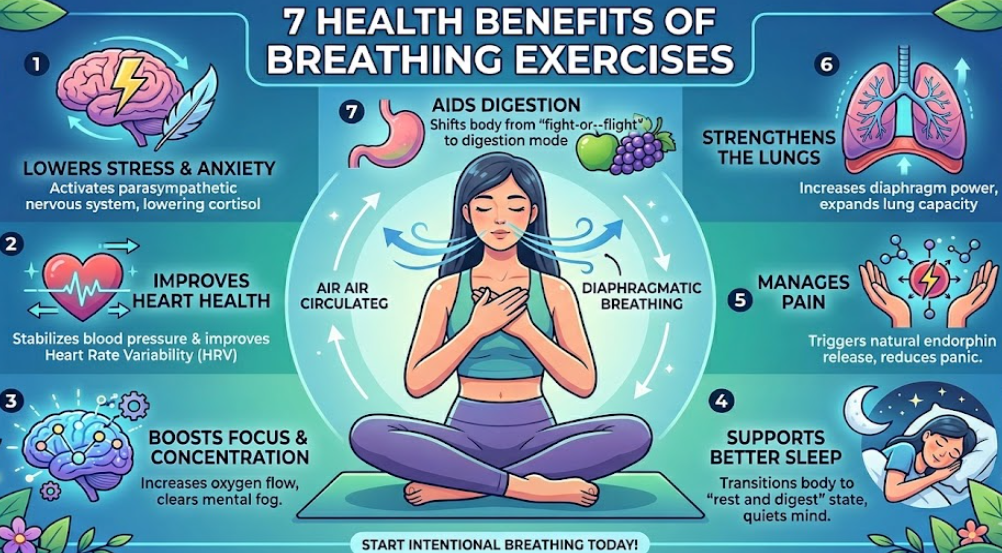
When we breathe, our autonomic nervous system is active. This system is what keeps our heart beating and helps our stomach digest food. However, unlike our heartbeat, we can consciously change our breath with breathing exercises.
Breathing exercises help us talk to our nervous system. When we change the rhythm and depth of our inhales and exhales, we can switch our bodies from one of high stress or alert to a calm one. Ultimately, practising intentional breathing helps us control our brain’s stress levels, and in this blog, we’ll discuss all the benefits it offers.
7 Ways Breathing Exercises Benefit Your Health
Every day, we breathe about 22,000 times without thinking about it. But when we practice intentional breathing, we enjoy more benefits than just staying alive:
1. It Lowers Your Stress and Anxiety
When you take deep, slow breaths, you send a signal to your brain to relax. This activates the parasympathetic nervous system, which acts like a brake for your body’s stress response. It lowers the cortisol level (the stress hormone) and helps you feel calm.
2. It Improves Your Heart Health
Practising deep breathing can help lower your heart rate and stabilise your blood pressure. When you do this over time, your heart rate variability (HRV) will improve, which is a major indicator of how well your body handles stress and recovers from physical activity.
3. It Boosts Your Focus and Concentration
Have you ever noticed that when you feel overwhelmed, your breath becomes shallow? Shallow breathing limits oxygen to the brain. But when you practice breathing exercises, especially box breathing, you increase oxygen flow and clear out mental fog, making it easier to focus on tasks.
4. It Helps You Sleep Better
Practising breathing exercises before bed helps transition the body from alertness to rest. It slows down a racing mind and physically prepares your muscles to let go of tension, making it easier to fall and stay asleep.
5. It Helps You Manage Pain
Physiotherapists use breathing exercises in pain management. Breathing deeply triggers the release of your body’s natural pain killers, endorphins. It also helps change your psychological relationship with pain, reducing the panic feeling that often makes physical pain feel worse.
6. It Strengthens Your Lungs
If you practise intentional breathing, you’re doing a world of good to your lungs. Breathing exercises strengthen your diaphragm (the muscle under your lungs). This improves your lung capacity and helps your body exchange oxygen and carbon dioxide more efficiently.
7. It Helps You Digest Better
There is a significant connection between your gut and your nervous system. So when you’re stressed, your body does not digest properly. But when you practise deep breathing, your body moves into rest-and-digest mode, which helps prevent bloating and indigestion.
3 Types of Breathing Exercises to Try
Below are three breathing exercises you can try anywhere:
Box Breathing
This is used mostly by athletes and first responders because it clears the mind and builds focus quickly. It’s called box breathing because you imagine a square with four equal sides. To practice this, follow these steps:
- Step 1: Inhale slowly through your nose and count to four.
- Step 2: Hold your breath and count to four.
- Step 3: Exhale slowly through your mouth and count to four.
- Step 4: Hold your breath again and count to four.
- Repeat: Cycle through this four or five times.
The 4-7-8 Technique
If you always feel anxious, this technique is for you. When you exhale, it will force your heart rate to slow down and help you fall asleep. To practice this, follow these steps:
- Step 1: Inhale through your nose for four seconds.
- Step 2: Hold your breath and count to seven.
- Step 3: Make a “whoosh” sound as you exhale through your mouth for eight seconds.
- Repeat: Do this for a total of 4 breath cycles.
Diaphragmatic Breathing
When you breathe through your chest, you keep yourself in a state of stress. But when you practice belly breathing, you train your diaphragm effectively, which gives you maximum oxygen exchange. To practice this, follow these steps:
- Step 1: Sit comfortably or lie down, then place one hand on your chest and the other on your belly.
- Step 2: Breathe in slowly through your nose. The goal is to make the hand on your belly rise, while the hand on your chest stays still.
- Step 3: Tighten your stomach muscles and let them fall inward as you exhale through pursed lips.
- Repeat: Practice this for two to three minutes to reset your nervous system.
If you ever feel dizzy while trying any of these, just go back to your normal breathing for a minute.
Final Thoughts
Breathing is more than what we do to stay alive. Intentionally practising breathing exercises offers you several benefits, from reducing your stress, strengthening your lungs, to helping you digest better. So, we encourage you to practise one of the three examples shared and watch your overall wellbeing improve.